
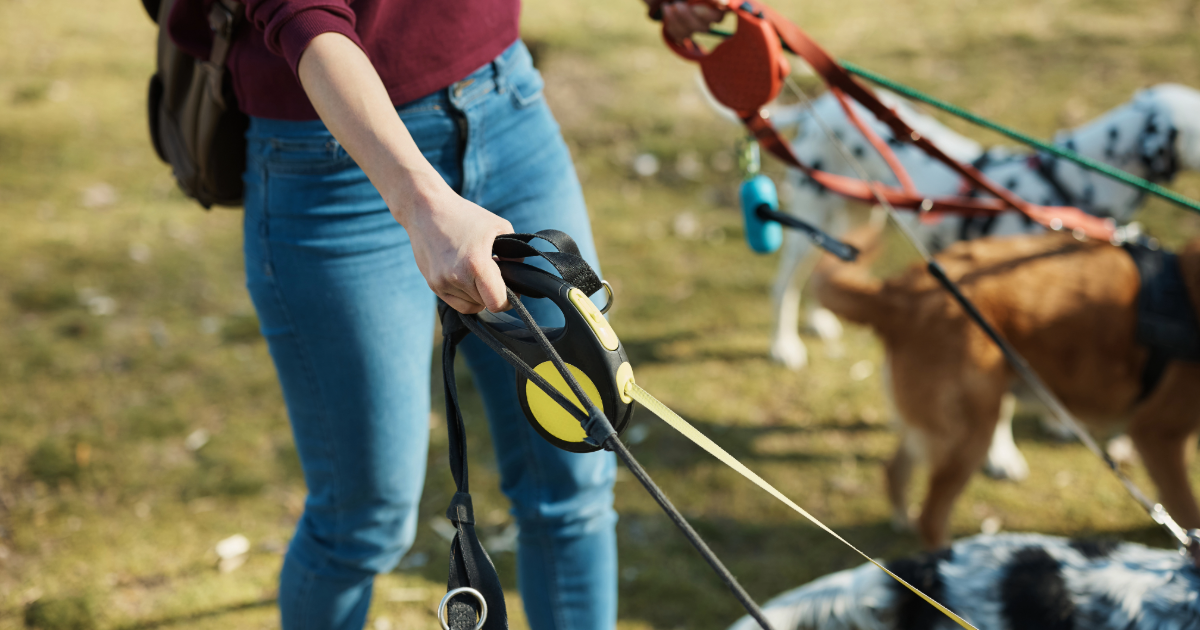
I have already written about the different types of dog training collars you can use when training your dog - links at the end of this blog post. In this article, I'd like to talk about the other piece of equipment that most of us use on a daily basis: dog leashes.
Choosing the right leash is an important part of dog training and everyday dog walking. Different types of leashes offer different benefits, from improved control to greater freedom for recall training. While leashes are generally much less controversial than collars, there are still several options available, and each serves a different purpose.
Understanding the pros and cons of each type can help you choose the best leash for both you and your dog.
Quick Guide: Which Dog Leash Is Best?
Everyday walks: Standard 6-foot leash
Wet weather: Biothane leash
Strong pullers: Sure-grip leash
Dual attachment systems: Double-ended leash
Recall training: Long line or retractable leash
Maximum freedom while maintaining safety: Long line
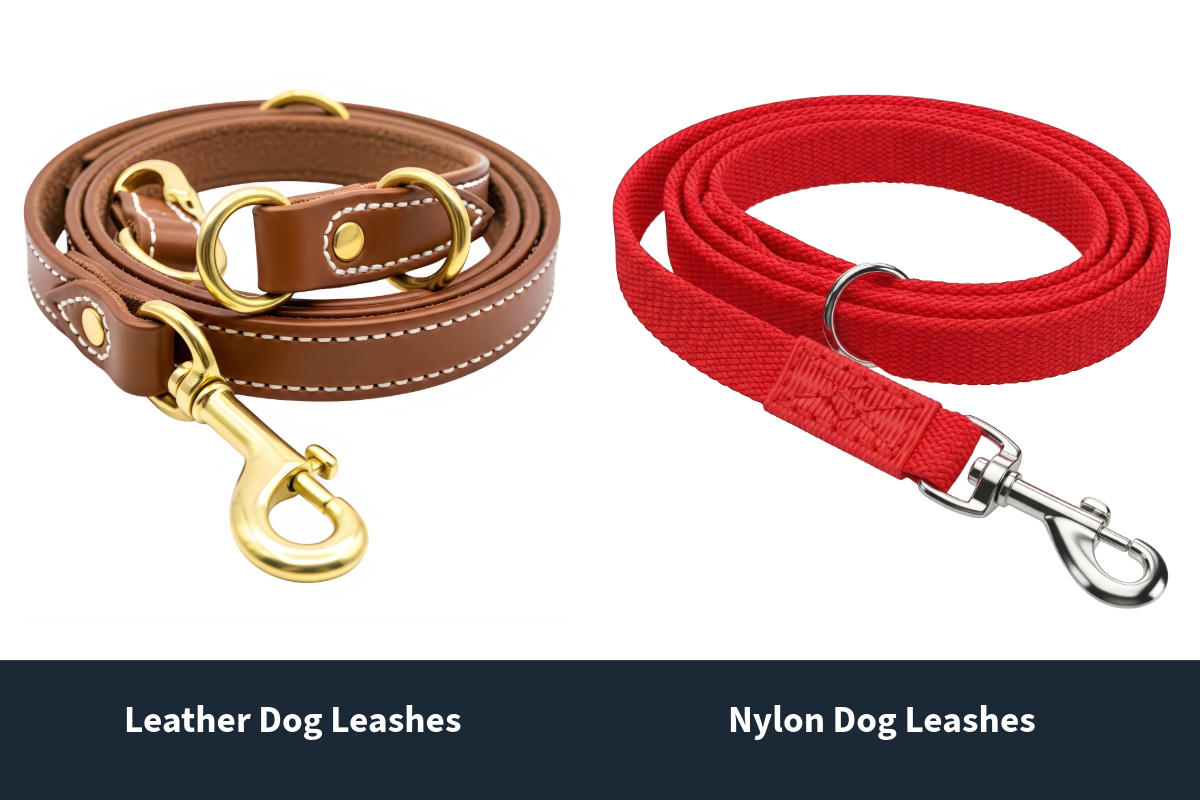
The Standard 6-Foot Leashes
This type of leash is a good length to give your dog a bit of freedom while you maintain control while walking your dog. There is a variety of materials used to make these leashes for you to choose from.
Leather Leashes
Pros
- This is a natural material.
- While leather leashes can be stiff at first, they soften with use and become very comfortable to hold.
- They are very strong and durable.
Cons
- They get stiff after drying out if they get soaked with rain.
- They do soften up again, but the leather is damaged. You can try to mitigate this by looking after the leash as you would a pair of leather shoes.
- They can be hard to find. You might need to go to a specialist supplier for dog training gear or even have a saddlemaker or leather worker make one for you.
Nylon Leashes
This has become the most popular material for leashes. You can get nylon long lines too.
Pros
- Nylon leashes are light, durable and inexpensive.
- The huge variety available means it is easy and fun to choose a leash that reflects your tastes in colour and pattern.
Cons
- This is not a natural material and does not biodegrade.
- They can fray over time, which weakens them. You need to check for this and replace the leash if it shows signs of wear, especially if you have a big, strong dog.
- They can become slippery when wet, potentially leaving burns on your hands and affecting your ability to control your dog if it is a strong puller or lunger.
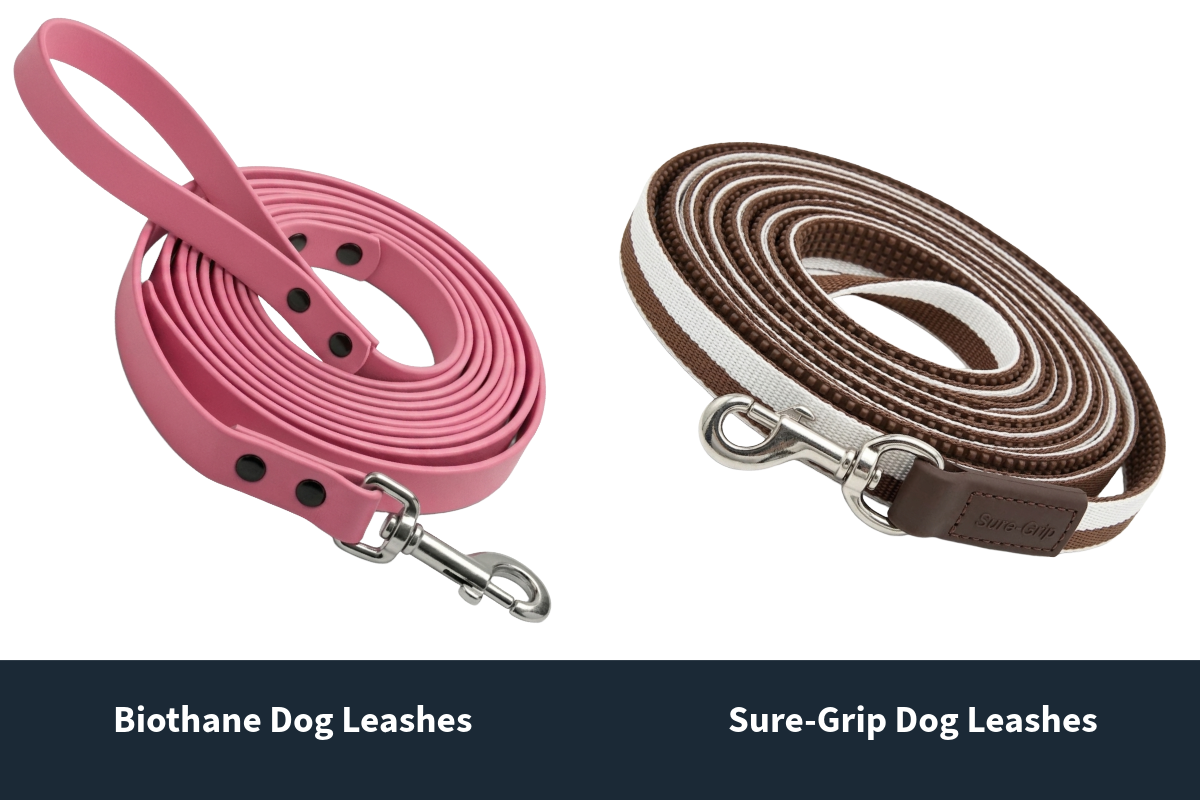
Biothane Leashes
Biothane leashes are becoming more and more popular. They come in the standard 6-foot length and you can get them as long lines too.
Pros
- Biothane leashes are very soft, flexible and comfortable to hold.
- They are waterproof and don’t retain or get damaged by moisture.
- They come in a variety of colours, though they are not usually patterned.
Cons
- They get slippery when they are wet, which can affect your control of your dog, but they don’t cause burns if they slip through your hand.
- They are more expensive than nylon leashes.
Sure-Grip Leashes
These leashes are standard lengths (you can get them as long lines too), but they have rubberized or silicone tracers woven into the fabric so that they do not slip through your hands easily, even when wet.
Pros
- These leashes give you better control if you have a big, strong dog, especially if you have small hands, or trouble gripping due to issues such as arthritis or an injury to the hand.
- They are soft, durable and very comfortable to use.
Cons
- They are heavier than leashes made from other materials.
- They can be hard to find as they are not generally stocked by standard pet supply stores.
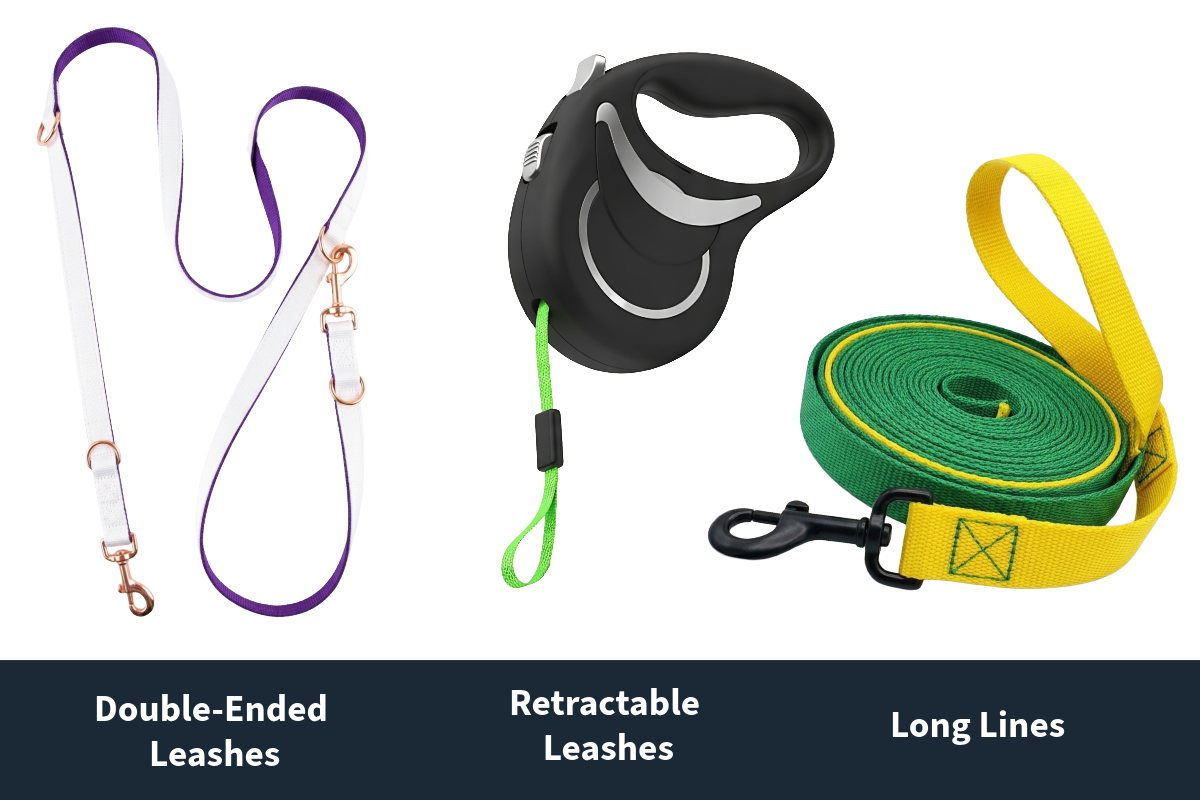
Double-Ended Leashes
These leashes have a buckle at each end, so they can be attached to two pieces of equipment, such as a harness and a collar, or both the front and back clips on a harness.
Pros
- These leashes give good control, making it easy to redirect your dog if it is pulling.
- They provide a backup for safety if the equipment attached at one end fails or creates risk (e.g. a head collar if the dog lunges).
Cons
- They can be bulky and take a bit of practice to manage.
- They do not provide freedom for the dog in the way that a standard leash does (though you can unclip one end to give the leash a little more length).
Retractable Leashes (Flexi-Leads)
These are retractable dog leashes that have a plastic handle that the leash retracts into automatically.
Pros
- These are an excellent tool for training recall (which was actually their original intended purpose).
- They give the dog more freedom to roam safely than a standard 6-foot leash does, but they can be locked at a desired length if you want to keep your dog closer, such as while walking along a city road.
Cons
- While they are in some ways easier to manage than a traditional long line, it can be awkward to reel a dog in quickly and safely if necessary.
- They can be dangerous, causing severe rope burns and injuries to both dogs and humans if they get wrapped around a leg, hand or finger.
Long Lines for Dogs
These are long training leashes that come in a variety of lengths (10’, 15’, 30’ and beyond). You can easily make one yourself of any length you choose.
Pros
- Long lines are great training aids for behaviours such as recall and stays that include distance.
- On walks, they can give a dog freedom while maintaining safety.
Cons
- They require some practice for safe handling.
- They can cause severe injury to the dog or handler if they get wrapped around a leg or arm. Also, the dog has room to build a lot of momentum when running or charging, which can lead to severe injury to the neck if attached to a collar. Attaching a long line to a back-clip harness is the safest option to help prevent this.
Choosing the Best Dog Leash
As with collars, you may need to experiment with leashes a bit to find out what type, length and material works best for you and your dog.
The purpose of a leash is to give you the control you need to keep your dog safe. The leash won’t train your dog. The leash should always be loose and your dog should walk beside you politely because he or she understands that is the position to be in, not because the leash is tight.
If the dog is ahead of you, sniffing and exploring the environment, he or she should come when called. Of course in an emergency, you use the leash as needed, but it will not replace basic training.
Freedom comes through training, not equipment.
Happy training and enjoy your dog! 
Frequently Asked Questions About Leashes
What is the best leash for dog training?
For most dogs, a standard 6-foot leash provides the best balance between freedom and control. However, the best leash depends on your training goals and your dog's needs.
Are retractable leashes good for dog training?
Retractable leashes can be useful for recall training and giving dogs more freedom, but they require careful handling and are not suitable for every situation.
What length leash should I use for recall training?
A long line between 15 and 30 feet is commonly used for recall training because it allows distance while maintaining safety and control.
Is a Biothane leash better than a nylon leash?
Biothane leashes are waterproof and easy to clean, while nylon leashes are generally less expensive and available in more styles. The best choice depends on your needs and preferences.
Can a leash stop a dog from pulling?
No. A leash is a safety tool, not a training tool. Loose-leash walking comes from proper training and clear communication, not from relying on equipment alone.
Your next read on this blog:
Dog Training Equipment: How to Choose the Right Tools for Your Dog
Dog Walking Equipment: Pros, Cons & How to Choose the Right Gear

Looking for Dog Training in Ladysmith, British Columbia, or Nearby?
We Can Help! At Canine Companions, we offer Group Dog Training Classes that provide a fun and supportive environment for your dog to learn essential skills while socializing with other dogs and people. These classes are ideal for building your dog’s confidence and improving obedience in a real-world setting. Learn more about our classes here!
If you’re dealing with specific challenges, our Private Dog Training Sessions are a fantastic option. These one-on-one lessons allow us to create a customized training plan tailored to your goals and your dog’s unique needs. Whether it’s addressing problem behaviors or mastering advanced skills, private sessions offer focused attention and faster progress.
And don’t forget to follow us on Instagram and Facebook for dog training tips, fun videos, and expert advice to help you and your dog thrive!