
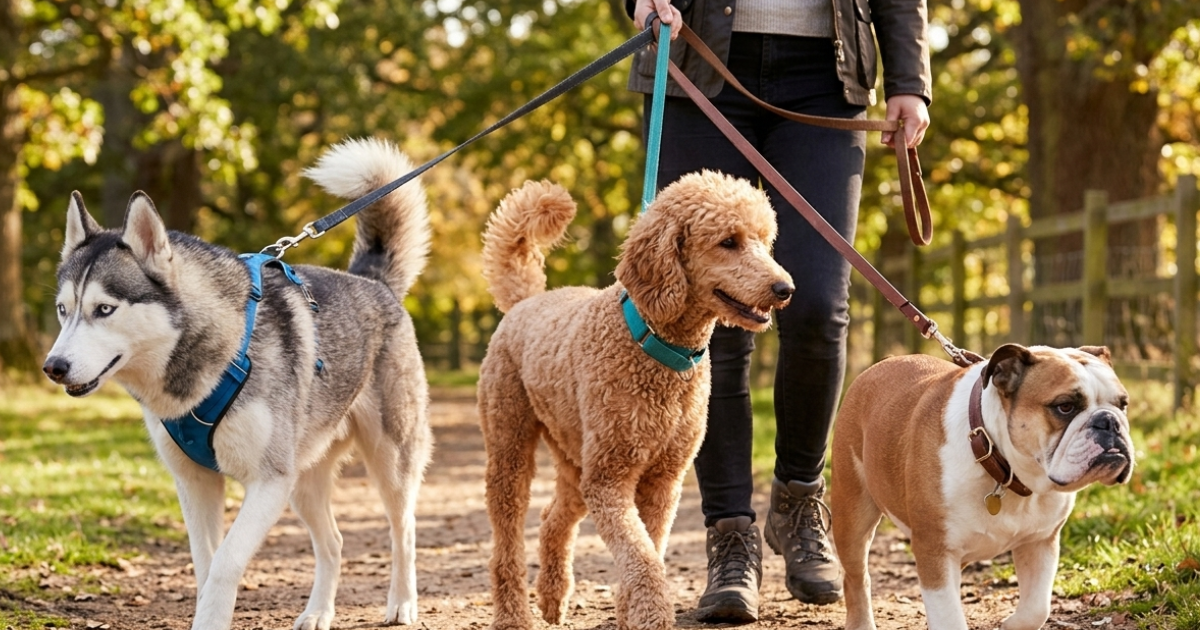
There is a wide variety of dog walking equipment available, and people often ask for recommendations on what to use. The truth is, there is no single solution that works for every dog.
I’m not a trainer who recommends the same piece of equipment for every situation. There are many factors involved in choosing the right gear, and it’s important to consider what works for both ends of the leash. In many cases, you may need to experiment to find what works best for you and your dog.
For example:
- Some dogs that pull on a flat collar stop when switched to a front-clip harness. Others dislike harnesses and do better in a collar.
- A handler with physical limitations and a powerful dog may need different equipment than someone without those challenges.
- An experienced trainer may use different tools than someone working with their first dog.
Below is a general review of the most commonly used dog walking equipment, along with their pros and cons.
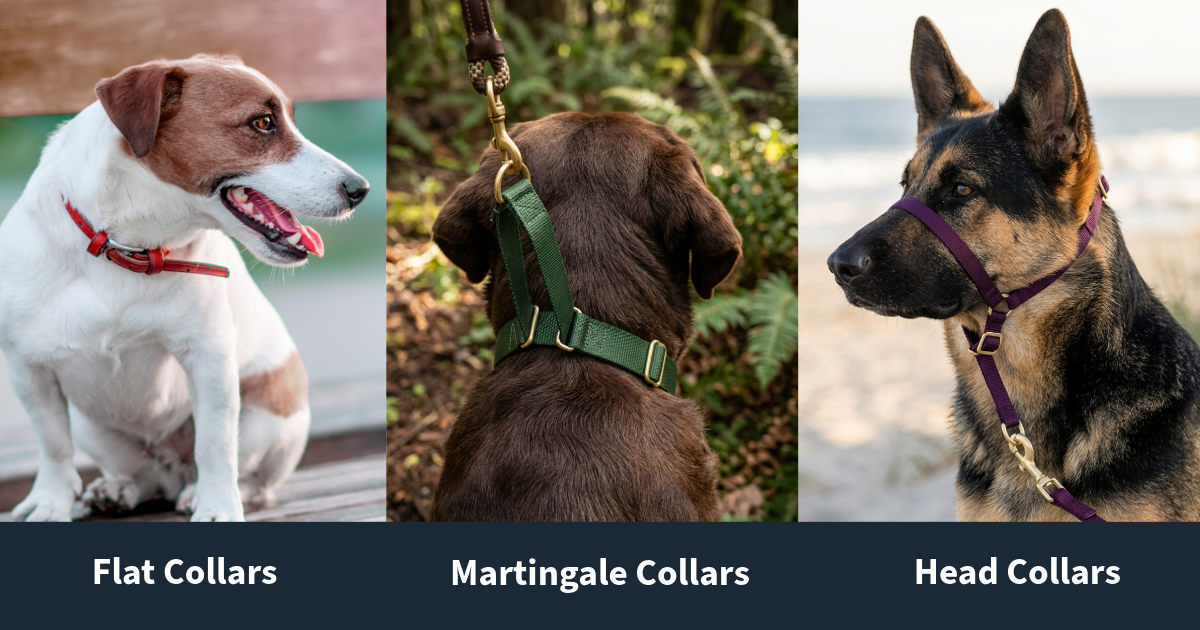
Flat Collars
These are the traditional collars many people use for walking their dogs.
Pros
- Very neutral for dogs that already walk politely
- Ideal for holding ID tags and attaching a leash
Cons
- Can put pressure on the trachea if the dog pulls or lunges
- May not discourage pulling but can still cause damage
- Some dogs with small heads in relation to their necks (like sighthounds or collies) can slip out of them
Martingale Collars
Similar to flat collars, but designed to tighten slightly when the dog pulls.
Pros
- Neutral when the dog is walking politely
- Even tightening prevents the dog from slipping out of the collar
- Fitted correctly, when tightened, these collars distribute pressure evenly around the neck, reducing the chance of injury
Cons
- Not always effective for strong, determined pullers
- Chain sound can be aversive (cloth versions help)
- For training use only. The chain can get caught during play, and a panicking dog could strangle itself. It’s difficult to remove without a buckle
Head Collars
Head collars work by controlling the dog’s head, reducing forward pulling.
Pros
- Can reduce pulling in some dogs
- Provides control of a reactive or aggressive dog's head
Cons
- Many dogs dislike them and don’t tolerate having equipment on their snouts
- Some dogs continue to pull, as the discomfort isn’t enough to discourage it, and rubbing can cause injury
- If the dog lunges, the head collar can cause the head to snap back, potentially leading to serious neck injury
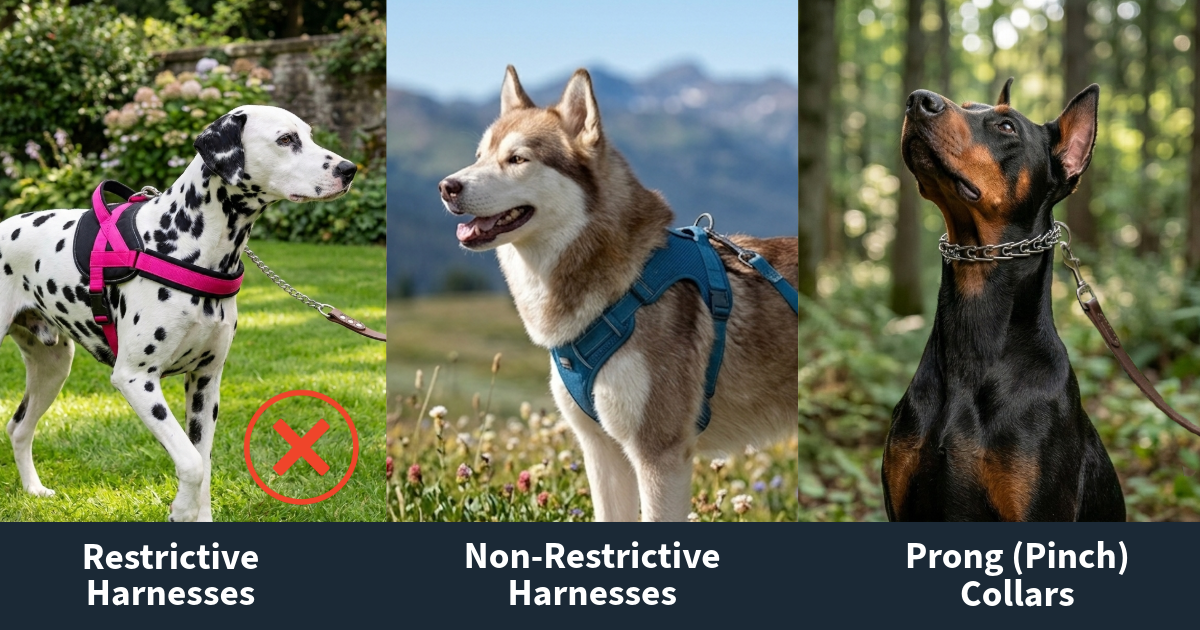
Restrictive Harnesses
Restrictive harnesses work by limiting the dog’s ability to move its legs freely. They alter the dog’s natural gait.
I’m going to be honest about my feelings with this type of harness: it is the one piece of equipment I never recommend.
They appear benign, but they teach the dog nothing, and more and more vets are becoming concerned about the long-term damage to the dog’s muscle structure caused by the alteration to the dog’s natural gait.
Non-Restrictive Harnesses
These allow the dog to move freely and are widely used.
Pros
- Comfortable and safe for the neck
- Often include front and back clip options
- Front clip may help reduce pulling
Cons
- Back clip offers very little control
- Pulling against a harness can increase frustration
- Some evidence suggests front clip use may still affect gait over time
Prong (Pinch) Collars
These collars teach a dog not to pull by creating discomfort and release
Pros
- Properly fitted, pressure is evenly distributed and released as soon as the dog stops pulling
- The dog controls the correction, helping it learn quickly not to pull
- They provide better control over large, strong dogs
- Low risk when used correctly
Cons
- They can look intimidating and often get negative reactions
- They use pressure to teach, so the dog must first learn how to turn it off and yield to it
- If used incorrectly, they are ineffective because the dog doesn’t understand the pressure
- Inconsistent or harsh corrections can be abusive
Final Thoughts: Choosing the Right Dog Walking Equipment
As you can see, every type of equipment has its pros and cons. There is no “best” option for every dog.
Consider factors such as:
- Your dog’s size, health, and behaviour
- Your own physical ability and experience
- Your training goals
Be open to experimenting to find what works best.
And remember: equipment does not replace training.
If your dog is consistently pulling or lunging, the solution is training—not just changing gear. The good news is that training builds communication, trust, and a stronger relationship with your dog.
And most importantly: it should be fun! 😊

Looking for Dog Training in Ladysmith, British Columbia, or Nearby?
We Can Help! At Canine Companions, we offer Group Dog Training Classes that provide a fun and supportive environment for your dog to learn essential skills while socializing with other dogs and people. These classes are ideal for building your dog’s confidence and improving obedience in a real-world setting. Learn more about our classes here!
If you’re dealing with specific challenges, our Private Dog Training Sessions are a fantastic option. These one-on-one lessons allow us to create a customized training plan tailored to your goals and your dog’s unique needs. Whether it’s addressing problem behaviors or mastering advanced skills, private sessions offer focused attention and faster progress.
And don’t forget to follow us on Instagram and Facebook for dog training tips, fun videos, and expert advice to help you and your dog thrive!